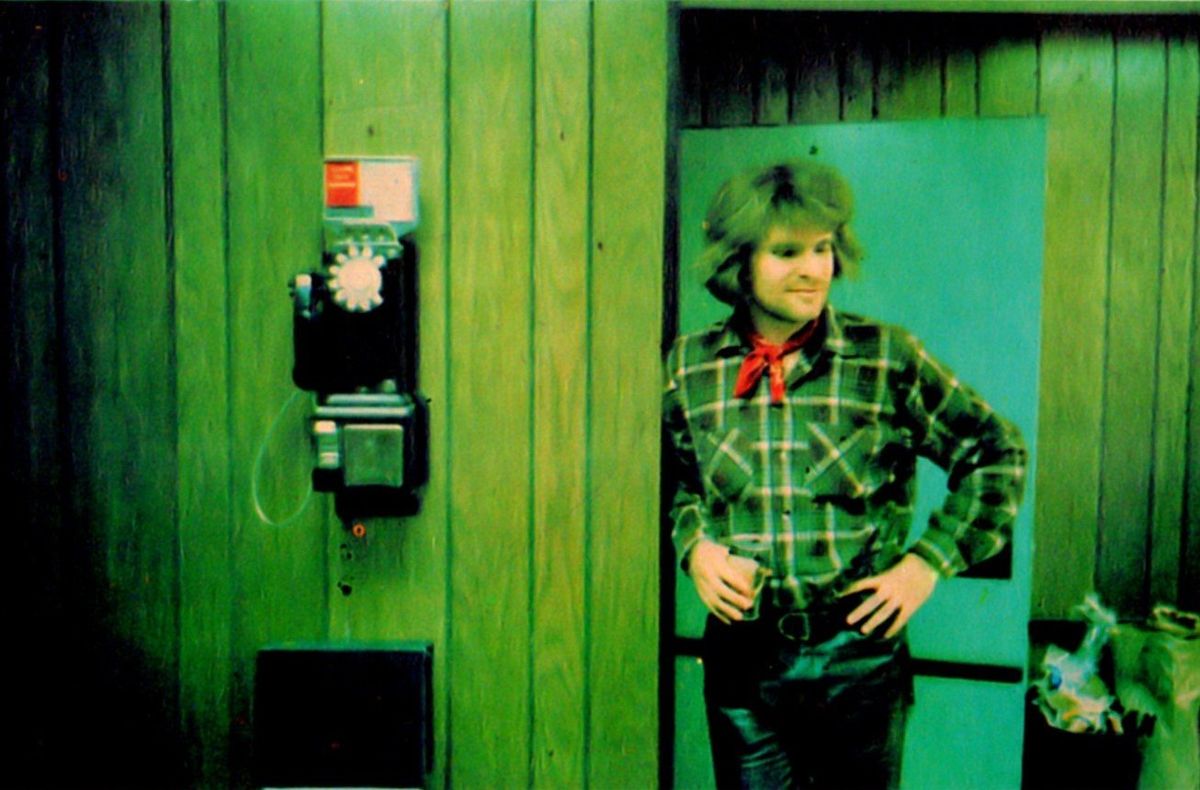
In 1973, John Fogerty answered a season of transition by turning a hymn into a one-man country meditation.
When John Fogerty recorded “Have Thine Own Way, Lord” for his 1973 album The Blue Ridge Rangers, he was not presenting himself in the usual fashion of a newly solo rock singer. The album was credited to The Blue Ridge Rangers, but the “group” was Fogerty alone: vocals, guitars, bass, drums, and the surrounding country textures all handled by the same musician. Coming after the end of Creedence Clearwater Revival, the record has the feeling of a deliberate step sideways rather than a theatrical arrival.
That choice matters. Fogerty had already become identified with a voice that could sound as if it had been pulled from river fog, truck-stop radios, and old American songbooks all at once. With Creedence, he wrote original songs that often felt weathered before they were new. On The Blue Ridge Rangers, he reversed the process. He set aside his own songwriting and filled an album with covers drawn from country, gospel, and traditional American popular music. Instead of announcing a new persona, he moved into older material and let the songs frame him.
“Have Thine Own Way, Lord” is especially revealing in that setting because it is not built for swagger. The hymn, associated with words by Adelaide A. Pollard and music by George C. Stebbins, is a prayer of surrender shaped around the image of clay in a potter’s hands. Its language asks for yielding rather than victory, for shaping rather than escape. In Fogerty’s hands, on an album where he supplied every part himself, that idea gains a quiet artistic tension. The lyric speaks of giving oneself over; the recording is the work of a man taking complete responsibility for every sound.
Fogerty’s version does not need grand gestures to make its point. The country-gospel setting places the hymn in a plainspoken musical room, closer to a small gathering than to a formal sanctuary. The performance draws strength from its economy. His vocal does not treat the hymn as a chance to display polish; it leans into the sturdy phrasing of the song, carrying the melody with a familiar grain and pressure. Around it, the instrumental parts serve the structure rather than compete for attention. Because the same player is behind them, the track feels less like a band conversation than a carefully layered act of listening.
That one-man construction could have become a novelty, but on this album it functions more like discipline. Fogerty was known for control in the studio, and The Blue Ridge Rangers turns that control into an entire method. On “Have Thine Own Way, Lord”, the method gives the hymn a particular intimacy. Each instrument seems placed with the practical instincts of someone who understands how much space the song requires. Nothing needs to be inflated. The reverence comes through restraint, through the decision to let a well-worn hymn keep its shape.
The album’s country direction also connects Fogerty to sources that had long been present beneath his music. Creedence was often described through rock terms, but its vocabulary drew heavily from country, blues, gospel, rockabilly, and folk traditions. By making a country covers album in 1973, Fogerty did not abandon his musical language so much as expose one of its foundations. “Have Thine Own Way, Lord” sits at the gospel edge of that foundation, reminding the listener that American roots music has often carried spiritual longing through simple forms and repeatable melodies.
The cover also gains meaning from its place in a transitional moment. After a defining band ends, the first solo statement can be loaded with expectation: a declaration, a rebuttal, a bid for reinvention. Fogerty chose something more unusual. He recorded under a group name that concealed the solitude of the project, played every instrument, and sang songs that did not originate with him. That combination creates an intriguing paradox. The album is intensely self-made, yet it is devoted to inherited material. It is solitary, yet it reaches toward communal music.
In that paradox, “Have Thine Own Way, Lord” becomes more than a respectful hymn cover. It sounds like an artist testing how to move forward without overexplaining himself. The song’s spiritual language should not be turned into a private diary, and the recording does not require that kind of speculation. What can be heard is enough: a musician in transition choosing humility of form, familiar repertoire, and total musical labor. The result is not loud reinvention. It is a quieter kind of return, one that finds room for craftsmanship inside surrender.
Nearly half a century later, the track still draws attention because of that balance. It belongs to a country album, a gospel tradition, and a solo career beginning under an invented band name. It carries the marks of Fogerty’s voice and hands, but it does not try to bend the hymn into a monument to personality. Instead, it lets an old prayer pass through a new circumstance. In doing so, it shows that transition does not always announce itself with noise. Sometimes it begins with one person in a room, building every part around a song that asks to be shaped.
