Forever and Ever, Amen: A Modern Collaboration That Extends the Life of a Country Classic
When Randy Travis released Forever and Ever, Amen on the 1987 album Always & Forever, the song quickly became a defining moment in country music. Written by Paul Overstreet and Don Schlitz, it climbed to the top of the Billboard Hot Country Singles chart and became one of the most recognizable works associated with Travis. Its appeal came from its clarity, its conversational tone, and the character of Travis’s voice, which carried a steady, unforced sincerity that shaped the emotional identity of the track.
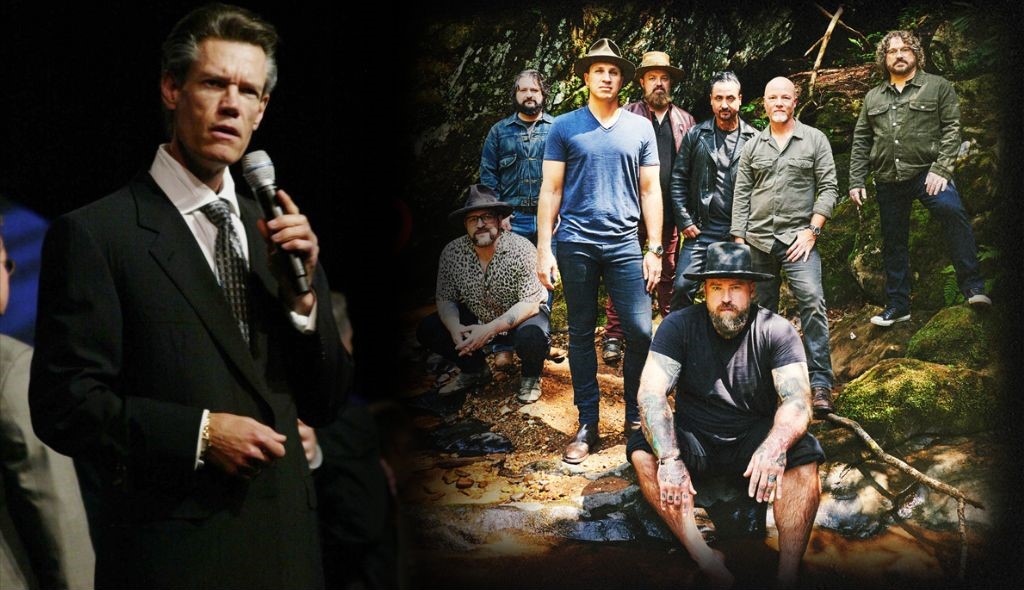
Many years later, the collaborative performance of the song with the Zac Brown Band introduced a new way of experiencing the material without altering its foundations. The collaboration is not a remake and does not attempt to redirect the meaning of the song. Instead, it adds another viewpoint to a work that already has deep cultural weight. Zac Brown’s vocal quality blends naturally with the song’s structure. His grounded phrasing aligns with the melody rather than competing with it. The band’s arrangement provides additional harmonic support and a slightly fuller acoustic texture, creating a sound that feels current while still aligned with the song’s traditional core.
The timing of the collaboration gives it further significance. At a later stage in Randy Travis’s life, when health challenges had limited his ability to perform as he once did, the presence of another established act created a shared space that honored both his legacy and his influence. The performance functions as a form of musical stewardship. The Zac Brown Band helps carry forward a song that has shaped multiple generations, showing that its appeal can be preserved without relying on reinvention.
Through this collaborative interpretation, the message of the song gains a wider frame. The original version presents a single voice expressing a personal vow. In the collaborative performance, the idea of enduring love becomes more communal. With additional voices and instrumentation, the song shifts from an individual declaration to a reflection of broader values that continue to resonate within the country music community.
From the perspective of Randy Travis’s career, the updated performance highlights the durability of the songwriting and the strength of his artistic foundation. The track does not require modification to remain relevant. Instead, it accommodates new participants while keeping its essential qualities intact. The collaboration demonstrates that the simplicity of the song is what allows it to survive changes in style, production trends, and generational tastes.
Ultimately, the shared performance between Randy Travis and the Zac Brown Band shows how a classic country song can expand its reach while preserving its identity. The collaboration does not attempt to surpass the original. It serves as a reminder that a well-crafted song can adapt, connect new audiences, and continue to carry meaning long after its first recording.
